
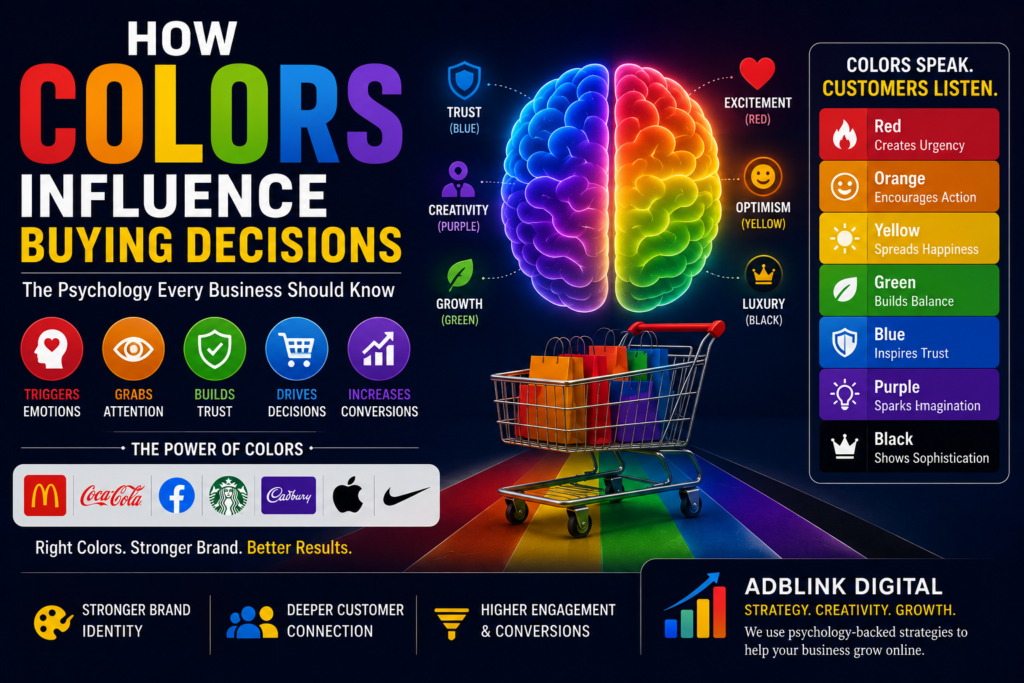
Have you ever wondered why most fast-food brands use red and yellow? Or why luxury brands often choose black and gold? It’s not a coincidence—it’s color psychology in marketing.
Colors influence how people think, feel, and make purchasing decisions. Before a customer reads your headline or learns about your product, they’ve already formed an impression based on your brand’s colors.
Whether you’re designing a website, creating social media posts, or running advertising campaigns, understanding color psychology in marketing can help you attract attention, build trust, and increase conversions.
At Adblink Digital, we help businesses create marketing strategies that connect with customers on both a visual and emotional level. In this guide, you’ll discover how colors influence buying decisions and how to use them effectively to grow your business.
What Is Color Psychology in Marketing?
Color psychology in marketing is the study of how colors affect consumer emotions, perceptions, and purchasing behavior. Every color communicates a message and creates an emotional response, often within seconds.
Research suggests that people form a first impression of a brand in just a few moments, and color plays a major role in that perception.
For businesses, choosing the right colors isn’t just about aesthetics—it’s about influencing customer behavior.
Why Colors Matter in Marketing
Colors affect nearly every aspect of branding and digital marketing, including:
- Brand recognition
- Website experience
- Product packaging
- Social media engagement
- Advertising performance
- Customer trust
- Buying decisions
A well-planned color palette can make your business more memorable and encourage customers to take action.
How Different Colors Influence Buying Decisions
Red – Energy, Urgency & Excitement
Red grabs attention faster than almost any other color.
It creates feelings of:
- Excitement
- Passion
- Urgency
- Action
That’s why many brands use red for:
- Clearance sales
- Call-to-action buttons
- Limited-time offers
Best for:
✔ Restaurants
✔ Retail brands
✔ E-commerce stores
Blue – Trust & Reliability
Blue is one of the most trusted colors in branding.
It represents:
- Security
- Professionalism
- Stability
- Confidence
Many banks, technology companies, and healthcare brands use blue because it builds credibility.
Best for:
✔ Financial services
✔ Healthcare
✔ Digital marketing agencies
✔ Corporate businesses
Green – Growth & Wellness
Green symbolizes:
- Nature
- Health
- Balance
- Growth
- Sustainability
Businesses in wellness, finance, and eco-friendly industries frequently use green.
Best for:
✔ Organic products
✔ Fitness brands
✔ Environmental businesses
Yellow – Optimism & Attention
Yellow creates feelings of:
- Happiness
- Positivity
- Warmth
- Creativity
However, excessive yellow can overwhelm users, so it’s best used as an accent color.
Best for:
✔ Food brands
✔ Children’s products
✔ Promotions
Black – Luxury & Sophistication
Black communicates:
- Elegance
- Power
- Exclusivity
- Premium quality
Luxury brands often pair black with gold or white to create a premium appearance.
Best for:
✔ Fashion
✔ Luxury products
✔ High-end services
White – Simplicity & Clean Design
White creates:
- Minimalism
- Clarity
- Cleanliness
- Modern aesthetics
Many premium websites use generous white space to improve readability and user experience.
Interactive Brand Color Quiz
Answer these questions:
Your business wants to:
A. Build trust
B. Increase urgency
C. Promote wellness
D. Position itself as premium
Your ideal customer values:
A. Security
B. Excitement
C. Healthy living
D. Luxury
Results
Mostly A: Blue
Mostly B: Red
Mostly C: Green
Mostly D: Black
Your answers can help guide your brand’s visual identity.
How Colors Affect Website Conversions
Your website colors can directly influence whether visitors become customers.
Examples include:
✔ Red CTA buttons for urgency
✔ Green buttons for positive actions
✔ Blue backgrounds for trust
✔ White layouts for readability
Good design isn’t just attractive—it’s strategic.
Businesses that understand color psychology in marketing often see better engagement and higher conversion rates.
Color Psychology on Social Media
Different colors influence how users interact with content.
Bright colors:
- Increase visibility
- Capture attention
- Encourage clicks
Soft colors:
- Feel calm
- Build trust
- Improve readability
Consistent brand colors also improve brand recognition across Instagram, Facebook, LinkedIn, and YouTube.
Common Color Mistakes Businesses Make
Choosing Colors Based on Personal Preference
Your favorite color may not appeal to your target audience.
Choose colors that match your brand values and customer expectations.
Using Too Many Colors
Too many colors create confusion.
Limit your primary palette to three or four core colors for consistency.
Ignoring Contrast
Poor contrast makes text difficult to read.
Always ensure strong contrast between backgrounds and text.
Inconsistent Branding
Using different color schemes across your website and social media weakens brand recognition.
Consistency builds trust.
Tips for Choosing the Right Brand Colors
✔ Understand your audience
✔ Define your brand personality
✔ Research competitor branding
✔ Test color combinations
✔ Maintain consistency across all platforms
Remember, colors should reinforce your brand message—not distract from it.
Why Color Psychology Matters for Digital Marketing
Every marketing asset uses color:
- Websites
- Logos
- Social media graphics
- Advertisements
- Landing pages
- Email campaigns
Applying color psychology in marketing strategically helps businesses:
✔ Increase click-through rates
✔ Improve customer trust
✔ Strengthen brand identity
✔ Boost conversions
It’s one of the simplest ways to create a stronger customer experience.
How Adblink Digital Uses Color Psychology
At Adblink Digital, we don’t choose colors randomly.
We develop branding and marketing strategies based on customer psychology and business goals.
Our services include:
- Brand identity design
- Website development
- Social media marketing
- SEO
- Paid advertising
- Creative content design
Every visual element is designed to improve engagement and encourage action.
Final Thoughts
Color is far more than a design choice—it’s a powerful marketing tool.
The right colors can influence emotions, shape perceptions, build trust, and encourage buying decisions before a customer even reads your message.
By understanding color psychology in marketing, businesses can create stronger brands, improve user experience, and increase conversions across every digital channel.
If your branding isn’t delivering the results you expect, it may be time to rethink your color strategy.
At Adblink Digital, we help businesses combine creativity with psychology to build brands that stand out and convert visitors into loyal customers.
Ready to create a brand that customers remember? Contact Adblink Digital today for a free branding and digital marketing consultation.