
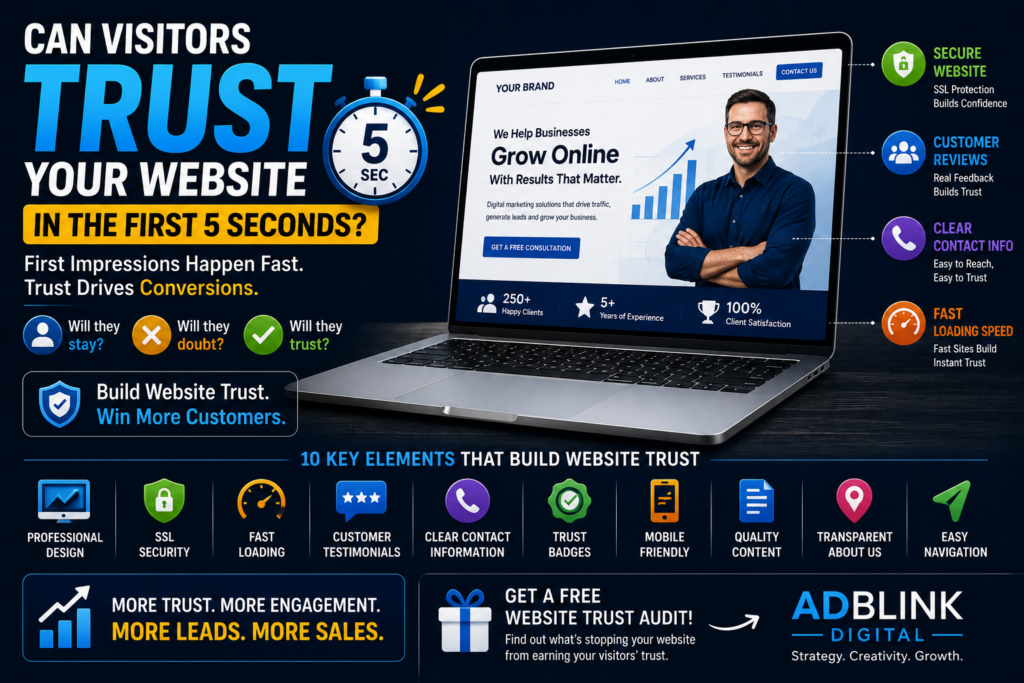
Imagine this: a potential customer clicks on your website after finding your business on Google or social media. Within just a few seconds, visitors decide whether to stay and explore your services, continue learning about your business, or simply leave and visit a competitor instead
It may sound surprising, but first impressions online happen incredibly fast. Studies consistently show that visitors form an opinion about a website within seconds. That’s why website trust is one of the most important factors influencing conversions, leads, and sales.
At Adblink Digital, we’ve seen businesses dramatically improve their online performance simply by making their websites more trustworthy. In this guide, you’ll learn why first impressions matter, what builds website trust, and how to ensure visitors feel confident enough to become customers.
Why the First 5 Seconds Matter
When someone lands on your website, they immediately begin asking themselves questions:
- Is this business legitimate?
- Does this website look professional?
- Can I trust this company?
- Will this business solve my problem?
If the answers aren’t clear, most visitors leave without taking any action.
Building website trust begins the moment your homepage loads.
What Is Website Trust?
Website trust refers to the confidence visitors have in your business based on your website’s appearance, content, security, and user experience.
A trustworthy website makes visitors feel comfortable sharing their information, making purchases, or contacting your business.
Without trust, even excellent products and services struggle to generate conversions.
The 7 Elements That Build Website Trust
1. Professional Website Design
Your design represents your brand.
A modern website with clean layouts, readable fonts, and consistent branding instantly creates credibility.
Visitors often associate design quality with business quality.
Best Practices
✔ Clean layout
✔ Consistent colors
✔ High-quality images
✔ Easy navigation
Professional design is the first step toward improving website trust.
2. Fast Loading Speed
Nobody likes waiting.
If your website takes more than a few seconds to load, visitors often leave before seeing your content.
A fast website communicates professionalism and reliability.
Improve speed by:
- Compressing images
- Using quality hosting
- Optimizing code
- Reducing unnecessary plugins
Speed directly impacts user experience and website trust.
3. Clear Headlines
Visitors should immediately understand:
- What your business does
- Who you help
- Why you’re different
Avoid vague messaging.
Instead, use simple headlines that clearly communicate your value.
Example:
“Helping Businesses Grow with SEO, Social Media & Performance Marketing.”
Clear communication builds confidence.
4. Customer Reviews & Testimonials
People trust other customers.
Adding:
- Google reviews
- Client testimonials
- Success stories
- Video reviews
helps reassure visitors that your business delivers results.
Social proof is one of the strongest contributors to website trust.
5. Secure Website (HTTPS)
Visitors look for the padlock icon in their browser.
An SSL certificate protects customer information and improves confidence.
Google also considers website security when ranking websites.
A secure website sends a strong message:
“This business cares about protecting its customers.”
6. Clear Contact Information
Legitimate businesses make it easy to get in touch.
Include:
- Phone number
- Email address
- Business address
- WhatsApp button
- Contact form
Visible contact information improves website trust and encourages inquiries.
7. Consistent Branding
Your website should match your:
- Logo
- Social media pages
- Marketing materials
- Brand colors
Consistency makes your business appear more established and reliable.
Interactive Website Trust Test
Answer YES or NO:
Does your website have:
- Professional design?
- SSL security (HTTPS)?
- Fast loading speed?
- Customer reviews?
- Clear contact information?
- Strong call-to-action buttons?
- Mobile-friendly design?
- Updated content?
- Consistent branding?
- Easy navigation?
How Trust Impacts SEO
Google wants to recommend trustworthy websites.
Factors that improve SEO include:
✔ Secure website
✔ Quality content
✔ Positive user experience
✔ Mobile optimization
✔ Fast loading speed
Improving website trust doesn’t just help visitors—it also supports search engine rankings.
How Website Trust Increases Conversions
Trust reduces hesitation.
Visitors who trust your website are more likely to:
- Request a quote
- Book a consultation
- Call your business
- Fill out contact forms
- Complete purchases
Even small improvements in trust can significantly increase conversion rates.
How Adblink Digital Builds Trustworthy Websites
At Adblink Digital, we create websites designed to build trust from the very first click.
Our services include:
- Website design & development
- SEO optimization
- Conversion rate optimization
- UI/UX improvements
- Landing page creation
- Brand strategy
Our focus is simple:
Build websites that inspire confidence, generate leads, and convert visitors into loyal customers.
Final Thoughts
Visitors don’t need minutes to judge your website—they often decide within seconds.
If your website doesn’t immediately communicate professionalism, credibility, and value, potential customers will likely leave and choose a competitor.
The good news?
Building website trust doesn’t require a complete redesign. Small improvements like better design, customer testimonials, faster loading speeds, and clear messaging can dramatically improve user confidence and conversion rates.
If you want a website that creates a powerful first impression and turns visitors into customers, Adblink Digital can help.
Ready to build a website people trust in the first five seconds? Contact Adblink Digital today for a free website audit and discover how trust-driven design can grow your business.